

How Many Registered Cheeses Are There
nine Great Spanish Cheeses You Need to Know
Global representations of Spanish cheeses are and so often confined to Manchego. While this acclaimed cheese, in all its magnificent forms, has certainly earned its reputation, in that location's much to be discovered outside of the La Mancha region; there'southward cheese-filled culture and history in every corner of the peninsula.
Cheesemaking in Spain is an aboriginal practice: archaeologists plant that styles of primitive cheesemaking existed in the Iberian peninsula since the Neolithic and Statuary ages. Withal the truthful drivers of the Spanish-style cheeses nosotros know today were the Romans, who introduced techniques like smoking and oil preservation to the peninsula.
Cheesemaking and consumption became and then prolific that in the 1400s the Castilian regime began regulating the toll of cheese. Kingdom of spain, like many areas in the Eu, still continues to regulate certain cheeses, just as they exercise with wine and other nutrient products. There are currently 26 cheeses throughout the state certified nether these quality controls, known as "denominaciones de origen protegidas," or DOPs.
Outside of DOPs, categorizing Castilian cheese isn't simple, merely Antonio Padilla, my local cheesemonger here in Seville, Spain, says that in the most basic terms, cheeses in Espana can be divided into three regions: cows in the north and the Balearic Islands, sheep in the middle, goats in the south and Canary Islands. There are certainly exceptions, but it'south by and large consistent.
Thus, cheese consumption here in Spain, like most of the country's food and potable culture, is hyper regional. Spaniards continue to eat foods that are tied to local production, and each region wears their private nutrient banners with pride. Here in the south, for instance, it's common to find cheese made from Payoyo goats on the card, but they'd be hard to come up past in the Basque Country, where Idiazabal cheese shines.
Last year Mat Schuster of Canela eating house in San Francisco introduced us to Spanish cheeses that are definitely worth tasting. Here we'll dive into even more to try on your adjacent trip to the cheese shop, or get straight from the source in Spain.

Burgos
The city of Burgos makes all sorts of cheeses. Only say "queso de Burgos" at a restaurant in Spain and you lot'll exist served a meaty, fresh cheese far different from the bold, hard cheeses Spain exports.
Traditionally made with just sheep'southward milk, cheesemakers play with hundreds of different varieties using caprine animal and moo-cow as well. Fresh cheese like this has a short expiration date, so you'll need to head to Espana to go your hands on it.

Cabrales DOP
The most well-known blue cheese in the country, Cabrales, is made in the Picos de Europa, or Peaks of Europe, specifically in the Asturias region. It'southward made primarily from cow's milk but you lot'll discover caprine animal and sheep blends as well. Some styles of cabrales are aged in caves—Padilla says that'due south how the best varieties are fabricated.
Cabrales is an especially intense cheese that often pricks the mouth and begs for acidic beverages, similar the dry cider consumed in the region.

Gamonedo DOP
More accurately known as Gamoneu in Bable (the regional language), this precipitous cheese also comes from the Asturias region. "Gamoneu is one of the best cheeses in Spain," says Padilla. It'southward a blueish cheese made from sheep, cow, and goat, and varies in both its sharpness and appearance depending on how long it's been aged.
Traditionally, this cheese was made by shepherds, who lived alone with their herds in the mountains. They would hang up the cheeses and smoke them in their small cabins. This item method is still utilized today, though there are also more modern methods available in the market.

Idiazabal DOP
Idiazabal is a raw sheep'southward milk cheese hailing from the Basque Country and Navarra. Idiazabal is made from either Latxa sheep or Carranzana sheep, both of which have iconically shaggy, mountain wool. Not all Idiazabal cheeses are smoked, but similar Gamoneu, many shepherds would hang these cheeses from their motel beams and fume them.
Each cycle of Idiazabal must be aged a minimum of 60 days. With an intense and balanced flavor, and a compact, fatty texture, Idiazabal is incorporated into all kinds of meals in the Basque Country, from savory sauces to desserts.
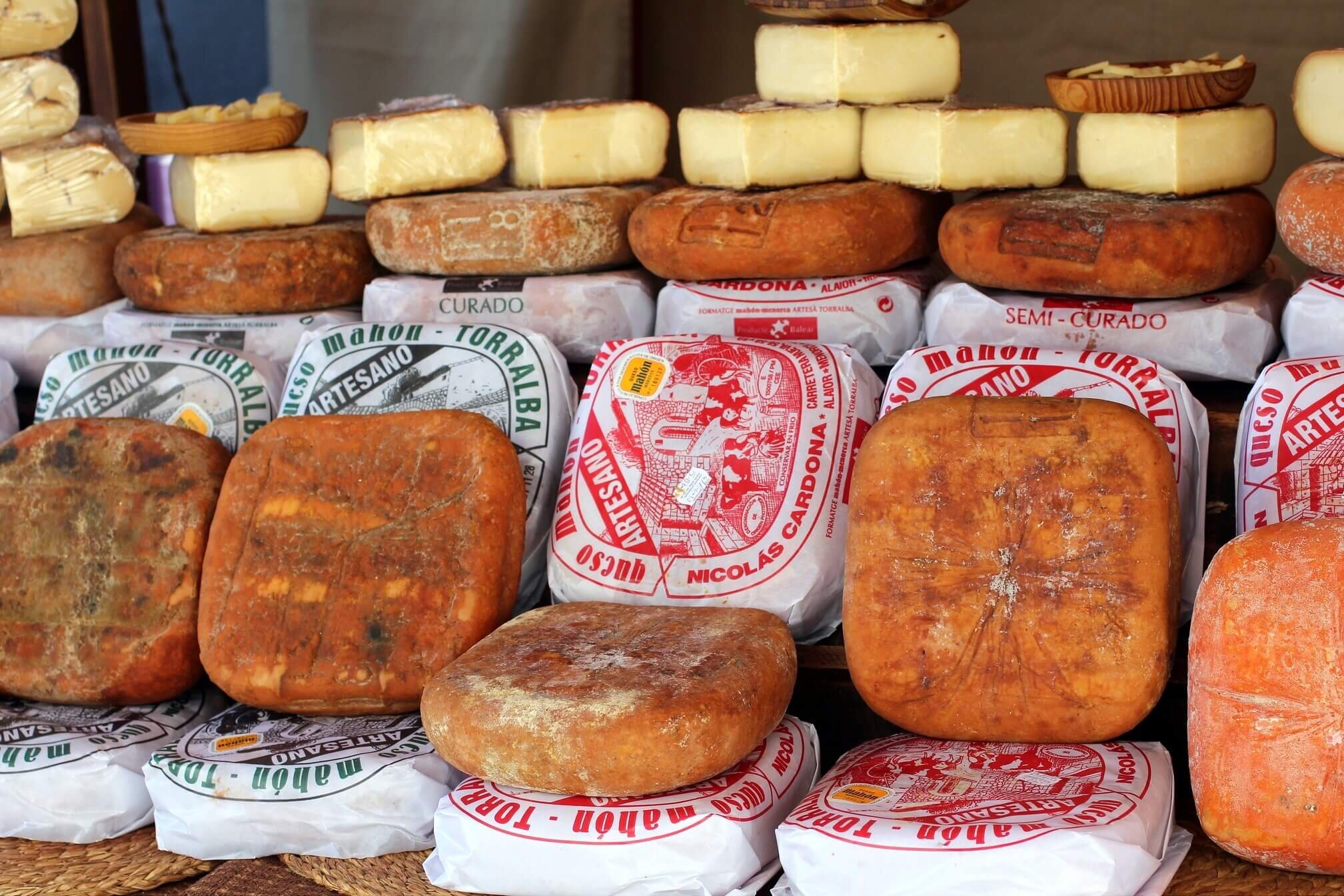
Mahón DOP
This raw cow's milk cheese hails from the Balearic Island of Menorca. The Brits actually gave it its name: they invaded the island in 1708, started exporting the cheese, and called information technology Mahón after the port from which it left.
During the curing process, Mahón is wrapped in canvas material and suspended by its four corners with twine, producing a foursquare form with rounded edges. It's and so rubbed with olive oil or paprika. Depending on it's curing procedure, Mahón ranges from flossy and buttery to a hard and nutty.

Majorero DOP
Known equally the cheese of Fuerteventura (a small isle in the Balearics), Majorero's proper noun comes from the breed of caprine animal used to make it: the Majorera. The island landscape is incredibly dry out, and these goats feed on cactus and thistle, producing sweet and herbal flavors in this hard cheese. Though the Majorera goat makes up the majority of this multifariousness, this DOP allows for the addition of Canary sheep'south milk.
Apart from the simple, natural style of the cheese, information technology's also commonly covered with paprika or gofio, a toasted flour made of various grains originating in the Canary Islands.
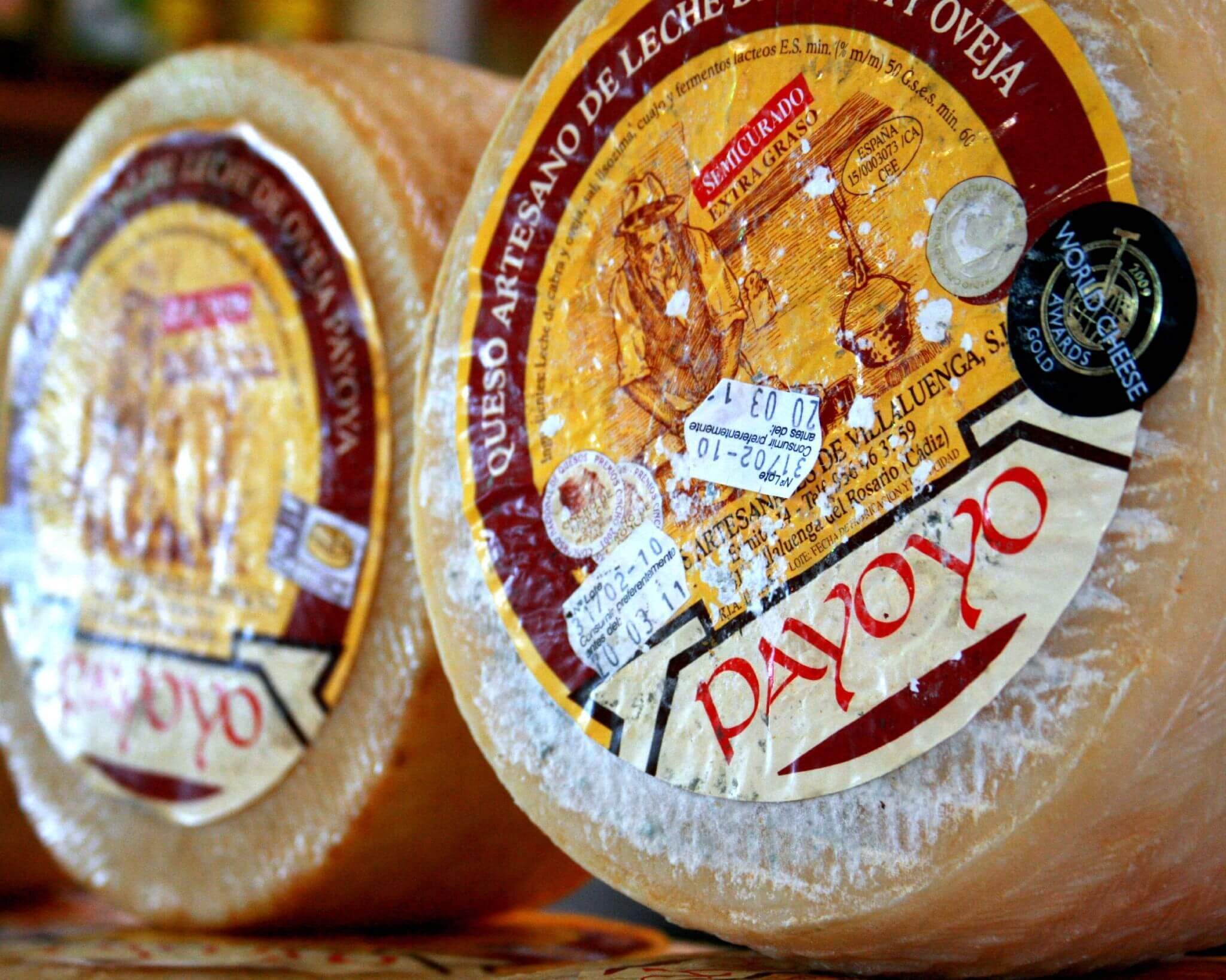
Payoyo
Technically, Payoyo is actually a brand of cheese made from indigenous Payoyo and Merina goats in the southern province of Cádiz. But the proper name has become associated with any cheeses made in the Sierra of Cádiz, nearly of which are made from Payoyo goats. Information technology's a flake confusing at this point, every bit there is not yet a DOP to regulate naming.
Thus, there's quite a variety of "Payoyo" cheeses, from soft and ultra-flossy styles reminiscent of chèvre, to difficult, aged cheeses with elegant toastiness. Cheesemakers are also experimenting with rinds bathed in rosemary, paprika, olive oil, and even local sherry wines.

Tetilla
This cheese gets its unforgettable proper name from its iconic shape: tetilla translates to "little teat" in Castilian. Legend has information technology that the people of Galicia (the most northwest autonomous community in Spain), having been forced to reduce the size of queen Esther'due south breasts painted on a scene on cathedral portico in Santiago de Compostela, rebelled and decided to create a cheese in the shape of a voluptuous breast.
Tetilla is made from cow'southward milk, and is flossy, light, smooth, and melts incredibly well.

Zamorano DOP
Zamorano comes from the province of Zamora in the Castille and León region of Spain and is made from two breeds of sheep, the Churra and the Castellana. Produced just next door to its famed neighbor, "Zamorano," says Padilla, is what I would choose over Manchego." It actually requires a longer curing period than Manchego's 60 days, with a minimum of 100 days. This curing process yields warm, rounded flavors like to that of Manchego. Pale yellowish and crumbly, information technology has a distinctive zigzag pattern on the rind.

Source: https://www.cheeseprofessor.com/blog/9-great-spanish-cheeses
Posted by: flemingsadelthe2000.blogspot.com
0 Response to "How Many Registered Cheeses Are There"
Post a Comment