

How To Register As A Native American In California
Who got the right to vote when?
A history of voting rights in America.
Updated: August eighteen, 2020
August 18, 2020 marks 100 years since the ratification of the 19th Subpoena to the United States Constitution granting women the right to vote.
Even so, obstacles like poll taxes, literacy tests and other discriminatory country voting laws would keep Black women (and men) disenfranchised for a farther 45 years, until the Voting Rights Act was signed into law on August 6, 1965.
The battle for women's suffrage had begun much earlier, when, in 1848, participants at the first women's rights convention at Seneca Falls in New York narrowly passed a resolution that women should seek the right to vote.
Able to vote:
White property owners Most women Men without belongings Most African Americans

1776
Only people who own state tin vote
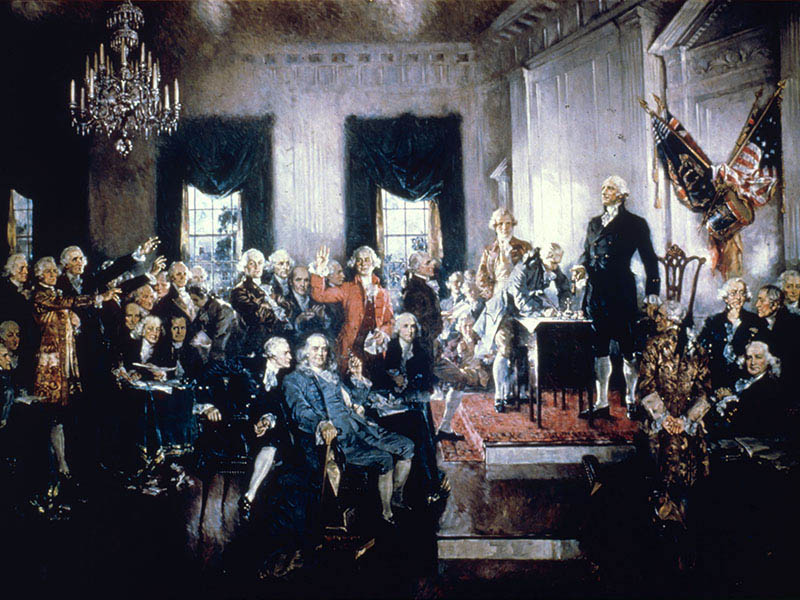
Declaration of Independence signed. Correct to vote during the Colonial and Revolutionary periods is restricted to property owners - most of whom are white male Protestants over the age of 21. But, New Jersey'due south constitution of the same year enfranchised all developed inhabitants who owned a specified amount of property, including women.
1787
No federal voting standard - states determine who can vote
Usa Constitution adopted. Because at that place is no understanding on a national standard for voting rights, states are given the power to regulate their own voting laws. In most cases, voting remains in the hands of white male landowners.
1790
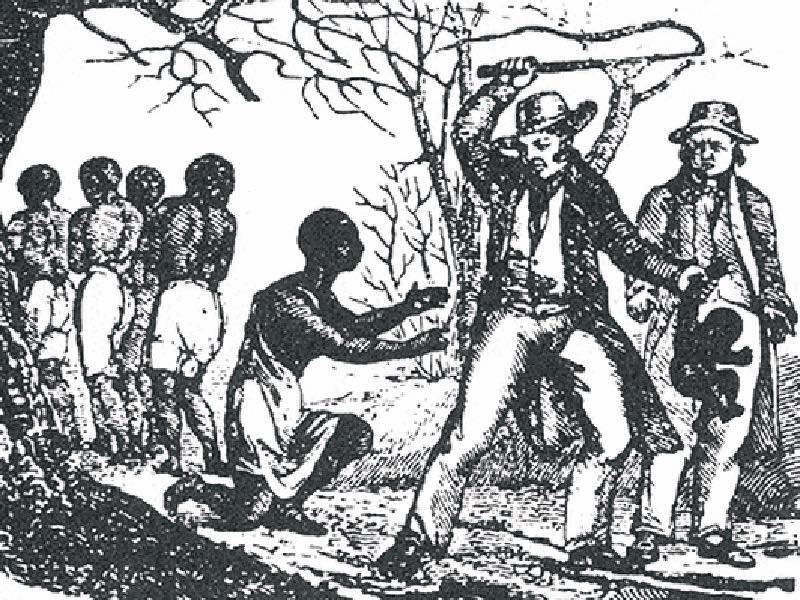
Only white men can become citizens, vote
1790 Naturalization Police force passed. Information technology explicitly states that simply "free white" immigrants can become naturalised citizens.
1792
No demand to own holding in New Hampshire
New Hampshire becomes the first state to eliminate its property requirements, thereby extending the right to vote to almost all gratuitous white men.
Able to vote:
White male holding owners All Women Nearly African Americans
1807
New Bailiwick of jersey women banned from voting
New Jersey, where some women and African Americans had been permitted to vote since 1776, changed its laws to allow only tax-paying, white male citizens the right to vote.
1828
Organized religion no outcome
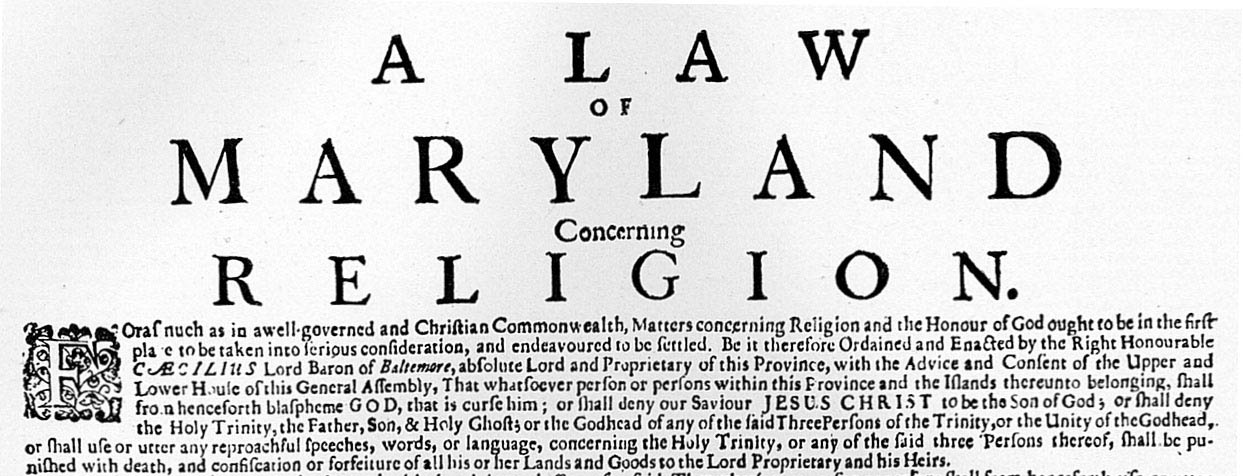
Maryland becomes the concluding state to remove religious restrictions when it passes legislation enfranchising Jews. White men can no longer be denied the right to vote on the basis of their religion.
1848
Anti-slavery and women's right activists unite
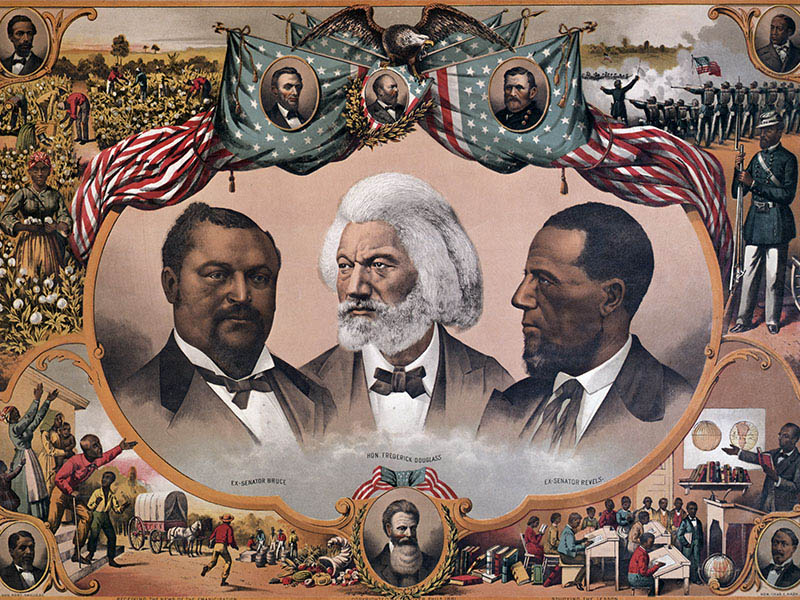
Women'south rights convention held in Seneca Falls, New York. Paper editor and abolitionist Frederick Douglass attends and gives a speech supporting universal voting rights, which helps convince the convention to adopt a resolution calling for women'southward suffrage.
1848
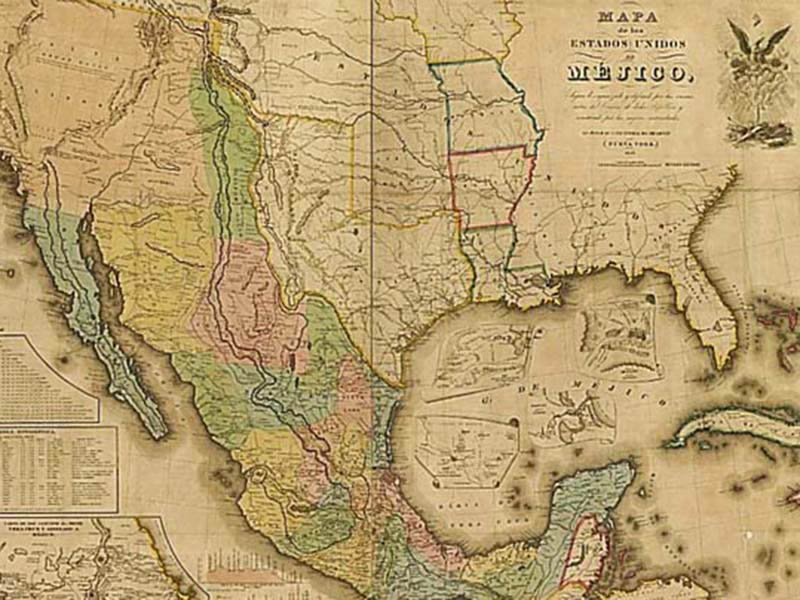
Citizenship granted, just voting denied
The Treaty of Guadalupe-Hidalgo ends the Mexican-American War and guarantees US citizenship to Mexicans living in the territories conquered by the US. Withal, English language requirements and violent intimidation limit access to voting rights.
Able to vote:
All White men All Women Most African Americans
1856
All states allows all white men to vote
North Carolina is the last land to remove holding buying as a requirement to vote.
1868
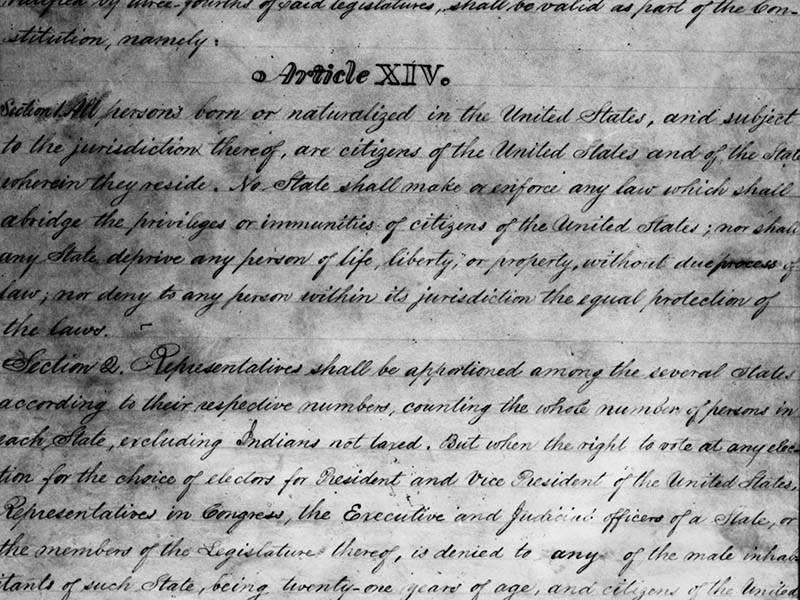
Former slaves granted citizenship
14th Amendment to the US Constitution passed. Citizenship is defined and granted to sometime slaves. Voters, all the same, are explicitly defined as male. Although the amendment forbids states from denying whatever rights of citizenship, voting regulation is still left in the easily of the states.
Able to vote:
White men Some African American men All Women
1870
Vote cannot exist denied considering of race, explicitly - and so other discriminatory tactics used
15th Subpoena passed. Information technology states that the right to vote cannot be denied past the federal or country governments based on race. Withal, soon later, some states begin to enact measures such as voting taxes and literacy tests that restrict the actual ability of African Americans to annals to vote. Violence and other intimidation tactics are besides used.
1872
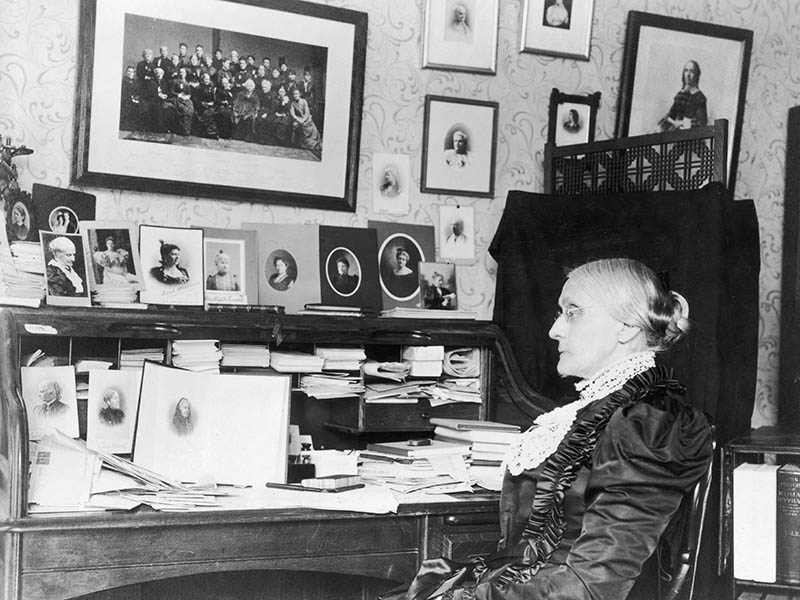
Women try to vote
Social reformer and women'southward rights activist Susan B Anthony is arrested and brought to trial in Rochester, New York for attempting to vote in a presidential election. At the same time, Sojourner Truth, a formerly enslaved woman and advocate for justice and equality, appears at a polling booth in Grand Rapids, Michigan, demanding a election. She is turned away.
Able to vote:
White men Some African American men All Women Native Americans
1876
Indigenous people cannot vote
The Supreme Court rules that Native Americans are non citizens as defined past the 14th Amendment and, thus, cannot vote.
1882
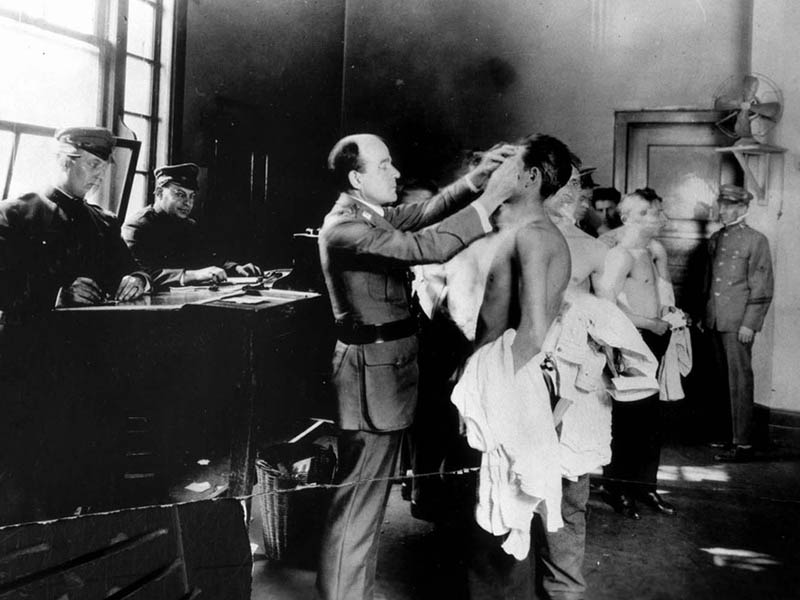
Chinese cannot exist American
The Chinese Exclusion Act bars people of Chinese ancestry from naturalising to become U.s. citizens.
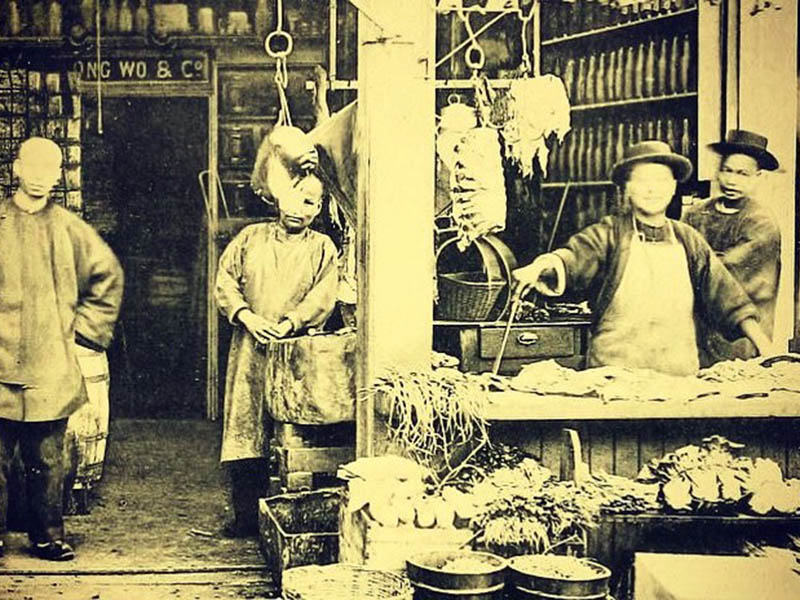
1887
Assimilation = Right to Vote
Dawes Act passed. Information technology grants citizenship to Native Americans who surrender their tribal affiliations.
1890
Wyoming legislates female person suffrage
Wyoming admitted to statehood and becomes first state to legislate voting for women in its constitution.

1890
Indigenous people must apply for citizenship
The Indian Naturalization Act grants citizenship to Native Americans whose applications are approved - similar to the process of immigrant naturalisation.
1912-thirteen
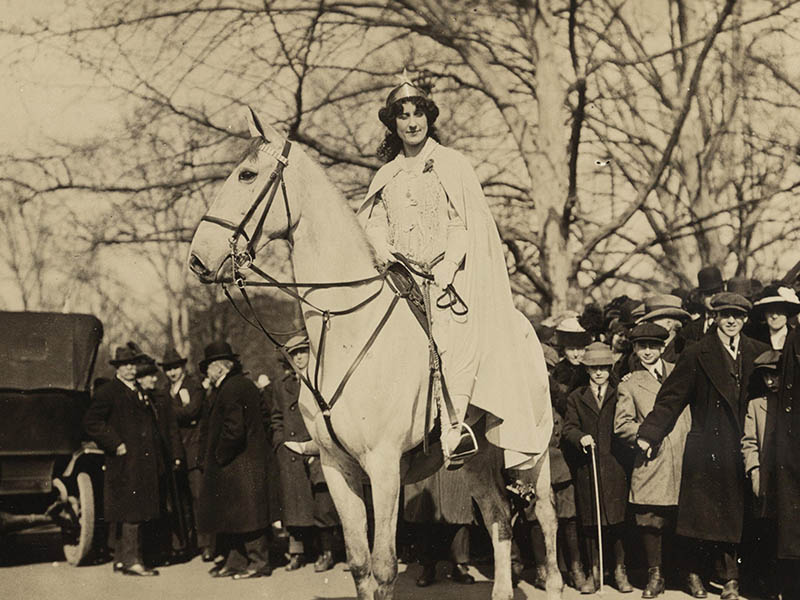
Women march for voting rights
Women lead voting rights marches through New York and Washington, DC.

1919
Military Service = Citizenship for Native Americans
Native Americans who served in the military during World War I are granted US citizenship.
Able to vote:
White men White women Some African Americans
1920
Correct to vote extended to women
19th Amendment passed, giving women the right to vote in both country and federal elections.
1922
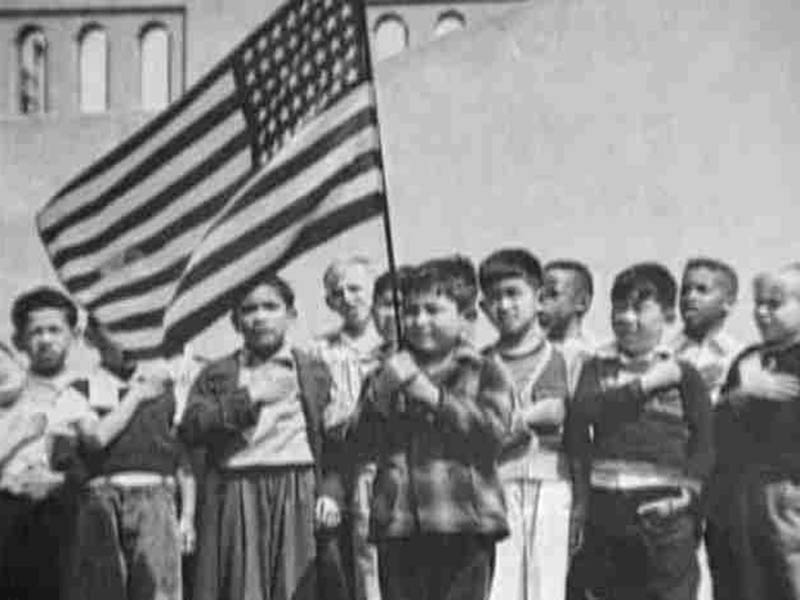
Asian ≠ White ≠ Citizen
Supreme Courtroom rules that people of Japanese heritage are ineligible to become naturalised citizens. In the next twelvemonth, the courtroom finds that "Asian Indians" are also not eligible to naturalise.
Able to vote:
White men White women Some African Americans Native Americans Asians
1924
Again, citizenship granted simply voting denied
The Indian Citizenship Human activity grants citizenship to Native Americans, just many states nonetheless make laws and policies that prohibit Native Americans from voting.
1926
State violence used to prevent people from exercising their correct to vote
While attempting to register to vote in Birmingham, Alabama, a grouping of African American women are browbeaten by election officials.
Able to vote:
White men White women Some African Americans Some Native Americans Asians
1947
Legal barriers to Native American voting removed
Miguel Trujillo, a Native American and former Marine, sues New Mexico for not allowing him to vote. He wins and New Mexico and Arizona are required to give the vote to all Native Americans.
Able to vote:
White men White women Some African Americans Some Native Americans Asians
1952
People with Asian ancestry can vote
McCarran-Walter Act grants all people of Asian ancestry the right to become citizens.

1961
23rd Amendment passed: Citizens of Washington, DC tin vote for president
It gives citizens of Washington, DC the right to vote for the US president. Merely to this twenty-four hours, the district's residents - nearly half of whom are African-American - withal do not have voting representation in Congress.
1963
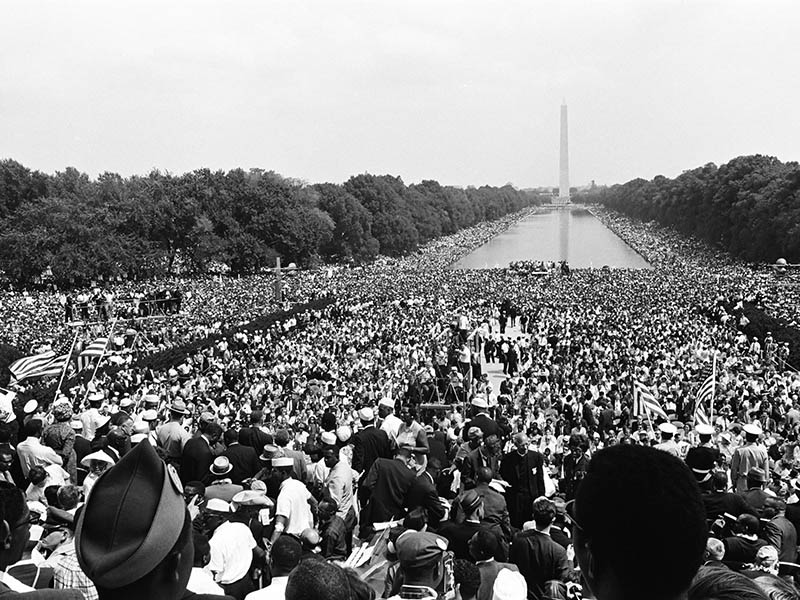
Voting rights as civil rights
Big-scale efforts in the South to annals African Americans to vote are intensified. However, country officials pass up to allow African Americans to register past using voting taxes, literacy tests and violent intimidation. Among the efforts launched is Freedom Summer, in which virtually a thousand ceremonious rights workers of all races and backgrounds converge on the South to back up voting rights.
1964
No revenue enhancement required to vote
24th Subpoena passed. Information technology guarantees that the right to vote in federal elections volition not exist denied considering of failure to pay any tax.
Able to vote:
White men White women African Americans Native Americans Asians
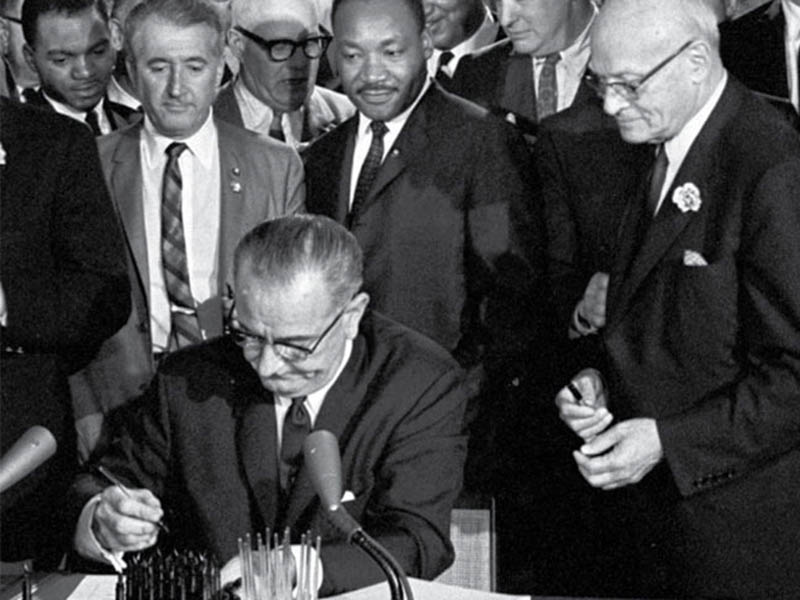
1965
Grassroots movement forces change in police force
Voting Rights Act passed. It forbids states from imposing discriminatory restrictions on who tin can vote, and provides mechanisms for the federal government to enforce its provisions.
The Voting Rights Deed of 1965 and subsequent laws passed in 1970, 1975 and 1982 congenital stronger voting protections to allow Native Americans to vote without intimidation, literacy tests, poll taxes and fraud.
1966
After the legal alter, struggle continues for social alter
Civil rights activist James Meredith is wounded by a sniper during a solo "Walk Against Fearfulness" voter registration march between Tennessee and Mississippi. The next day, nearly 4,000 African Americans annals to vote. Other civil rights leaders such as Martin Luther King, Jr. and Stokely Carmichael proceed the march while Meredith heals. Meredith re-joins the march at its decision in Mississippi.
Able to vote:
White men White women African Americans Native Americans Asians Citizens over the age of eighteen
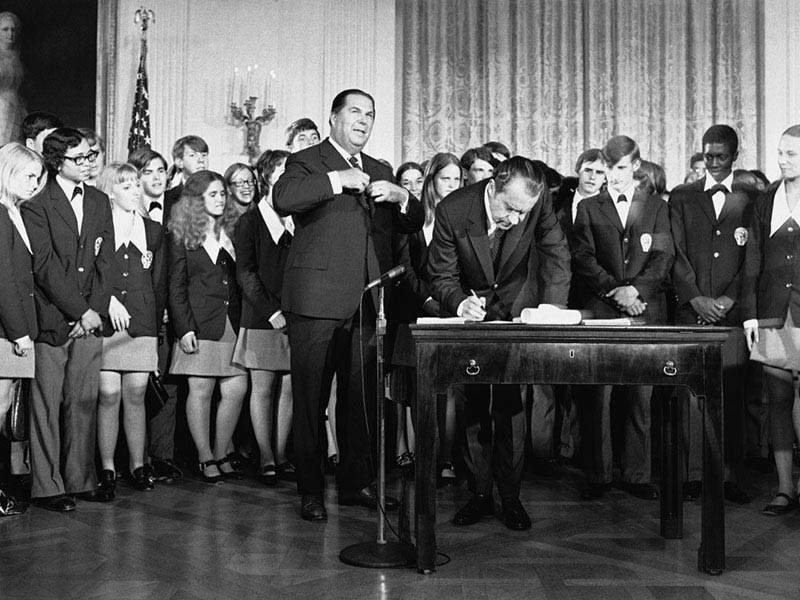
1971
Voting age lowered to 18
26th Amendment passed, granting voting rights to 18-year-olds. The amendment is largely a effect of Vietnam War protests demanding a lowering of the voting age on the premise that people who are old enough to fight are sometime enough to vote.
1975
Voting materials in various languages
Amendments to the Voting Rights Act require that certain voting materials be printed in languages besides English so that people who do not read English can participate in the voting process.
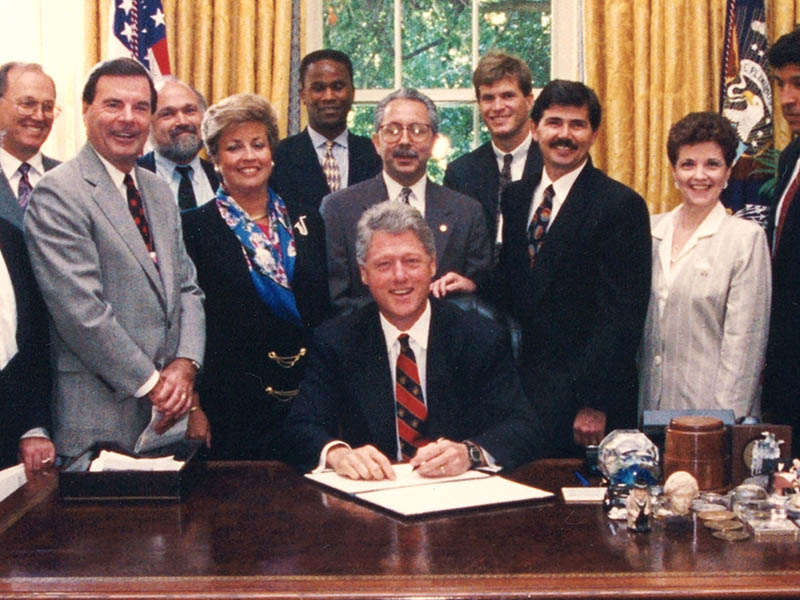
1993
Making voter registration easier
National Voter Registration Act passed. Intends to increase the number of eligible citizens who register to vote by making registration bachelor at the Department of Motor Vehicles, and public assistance and disabilities agencies.
Able to vote:
White men White women African Americans Native Americans Asians Citizens over the age of eighteen Residents of US colonies

2000
Residents of US colonies are citizens, merely cannot vote
A month before the presidential election, a federal court decides that Puerto Ricans living in Puerto Rico, though US citizens, cannot vote for the United states president. Residents of US territories including Puerto Rico, Guam, American Samoa and the US Virgin Islands - virtually four.ane million people in total - cannot vote in presidential elections and practise not take voting representation in the U.s. Congress.
Able to vote:
White men White women African Americans Native Americans Asians Citizens over the age of 18 Residents of US colonies Felons
2001
Contend - Should voting rights be taken away from felons? For how long?
The National Commission on Federal Election Reform recommends that all states let felons to regain their right to vote after completing their criminal sentences.
Nearly four million U.s. citizens cannot vote because of by felony convictions. In most states, felons are prohibited from voting while they are in prison or on parole. In some states, especially in the South, a person with a felony conviction is forever prohibited from voting in that state. These laws are a legacy of mail-Ceremonious War attempts to preclude African Americans from voting. Ex-felons are largely poor and disproportionately of color.
2002
Massive voting reform
To solve ballot inconsistency with more federal voting standards, the Assist America Vote Act (HAVA) is passed in response to the disputed 2000 presidential ballot. Massive voting reform endeavor requires states to comply with a federal mandate for provisional ballots, disability access, centralised, computerised voting lists, electronic voting and the requirement that start-time voters nowadays identification before voting.
Able to vote:
White men White women African Americans Native Americans Asians Citizens over the historic period of 18 Overseas troops and expats Residents of U.s. colonies Felons

2009
The Military and Overseas Empowerment Act
The deed established more efficient ways for troops stationed overseas and expatriates to asking and receive absentee ballots through the mail or electronically.
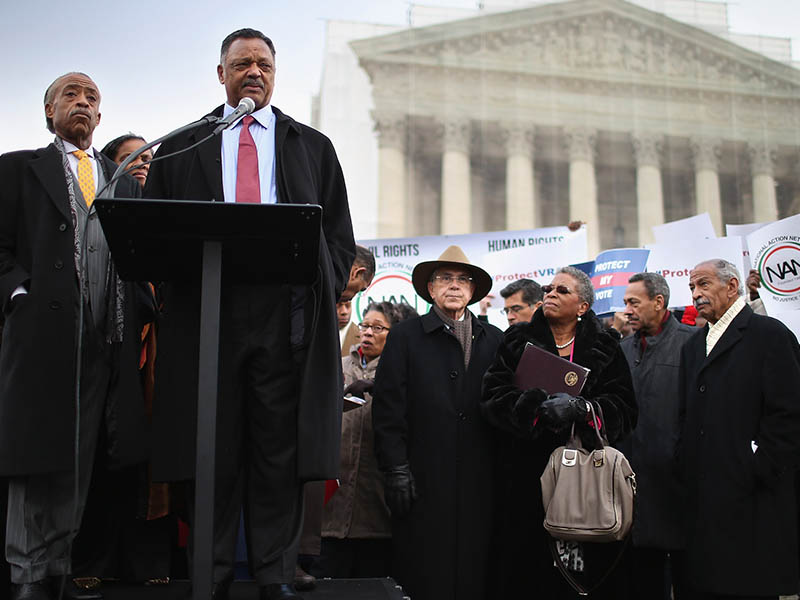
2013
Function of Voting Rights Act of 1965 struck down
The Supreme Court weakens the constabulary that had ensured federal government oversight of changes to voting systems in states with a history of discriminating against minority voters. Today, voter suppression tactics, including purging voter rolls, imposing strict voter identification laws, limiting the number of polling locations and cutting voting times, finer deny endless Americans the correct to vote.

Source: https://interactive.aljazeera.com/aje/2016/us-elections-2016-who-can-vote/index.html
Posted by: flemingsadelthe2000.blogspot.com
0 Response to "How To Register As A Native American In California"
Post a Comment